Module 1: Introduction to Eye Surgery Safety
This module provides an overview of the importance of eye surgery safety, the scope and relevance of the topic, and the learning objectives of the course.
This course provides comprehensive training on eye surgery safety and care, focusing on preventing accidents and ensuring patient well-being. It is designed for healthcare professionals, particularly those working in ophthalmology. By taking this course, participants will gain practical knowledge and skills to improve patient care and safety in eye surgery settings. The course covers key aspects of eye surgery safety, including patient preparation, surgical procedures, and post-operative care.
4.5/5
|128 reviews
|642 students enrolled
Comprehensive, industry-recognized certification that enhances your professional credentials
Self-paced online learning with 24/7 access to course materials for maximum flexibility
Practical knowledge and skills that can be immediately applied in your workplace
This module provides an overview of the importance of eye surgery safety, the scope and relevance of the topic, and the learning objectives of the course.
This module focuses on patient preparation and assessment for eye surgery, including patient evaluation, medical history, and informed consent.
This module provides you with practical frameworks and methodologies for conducting thorough risk assessments in various workplace settings. You'll learn evidence-based approaches to identify, evaluate, and prioritize potential hazards.
Effective risk assessment has been shown to reduce workplace injuries by up to 70% when implemented correctly, making this a critical skill for safety professionals.
This module covers the surgical procedures and safety protocols for eye surgery, including surgical techniques, instrument handling, and patient monitoring.
This module focuses on post-operative care and complications in eye surgery, including patient recovery, pain management, and potential complications.
This module covers quality improvement and patient safety in eye surgery settings, including quality metrics, patient feedback, and continuous quality improvement.
This module focuses on communication and teamwork in eye surgery settings, including effective communication, team dynamics, and conflict resolution.
This programme includes comprehensive study materials designed to support your learning journey and offers maximum flexibility, allowing you to study at your own pace and at a time that suits you best.
You will have access to online podcasts with expert audio commentary.
In addition, you'll benefit from student support via automatic live chat.
Assessments for the programme are conducted online through multiple-choice questions that are carefully designed to evaluate your understanding of the course content.
These assessments are time-bound, encouraging learners to think critically and manage their time effectively while demonstrating their knowledge in a structured and efficient manner.
The demand for skilled healthcare professionals in ophthalmology is increasing, driven by an aging population and advances in medical technology. This course provides a comprehensive foundation for a career in ophthalmology, with opportunities for advancement and professional development. Participants will gain the knowledge and skills necessary to work in a variety of settings, including hospitals, clinics, and private practices.
Career progression in ophthalmology typically involves specialization in a particular area, such as cataract surgery or retinal disease. Opportunities for professional development include attending conferences and workshops, pursuing advanced certifications, and participating in research studies. With experience and expertise, healthcare professionals can move into leadership roles, such as department manager or medical director.
Provides patient care and support during eye surgery and recovery
Assists surgeons and nurses during eye surgery, maintaining a safe and efficient operating room environment
Coordinates patient care and services, ensuring a smooth and safe experience for patients undergoing eye surgery
In addition to these roles, participants may also pursue opportunities in research, education, and healthcare management. The skills and knowledge gained in this course can be applied to a variety of settings, including academic institutions, research centers, and healthcare organizations. With the increasing demand for skilled healthcare professionals in ophthalmology, the career prospects for participants are promising, with opportunities for advancement and professional development.
Ophthalmology Resident
"This course has been instrumental in helping me develop the skills to prevent accidents during cataract surgery, particularly in handling unexpected eye contact with the surgical site, and I'm now more confident in my ability to ensure patient safety during these procedures."
Operating Room Nurse
"I gained valuable insights from this course on how to properly handle and care for patients after eye surgery, especially in terms of preventing infection and promoting healing, which has greatly improved my ability to provide high-quality care to my patients."
Ophthalmologist
"The course provided me with practical knowledge on how to minimize the risk of complications during eye surgery, including the importance of proper patient preparation and surgical site handling, which has been extremely beneficial in my daily practice."
Surgical Technician
"This course has helped me understand the critical role I play in maintaining a safe and sterile environment during eye surgery, and I've learned specific techniques for handling surgical instruments and equipment to prevent accidents and ensure the best possible outcomes for patients."
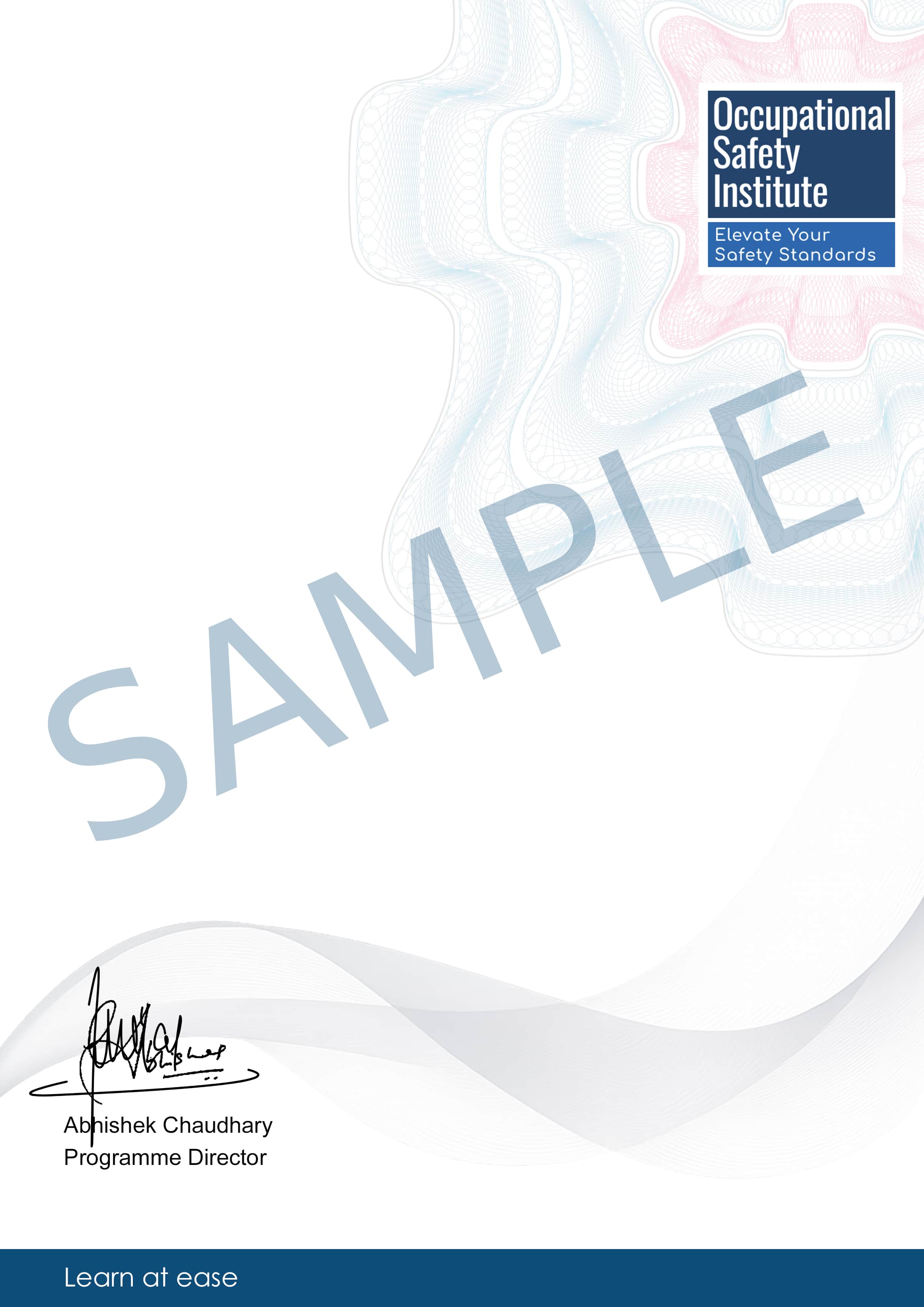
Upon successful completion of this course, you will receive a certificate similar to the one shown below:
No specific prior qualifications are required. However, basic literacy and numeracy skills are essential for successful completion of the course.
The course is self-paced and flexible. Most learners complete it within 1 to 2 months by dedicating 4 to 6 hours per week.
This course is not accredited by a recognised awarding body and is not regulated by an official institution. It is designed for personal and professional development and is not intended to replace or serve as an equivalent to a formal degree or diploma.
This fully online programme includes comprehensive study materials and a range of support options to enhance your learning experience: - Online quizzes (multiple choice questions) - Audio podcasts (expert commentary) - Live student support via chat The course offers maximum flexibility, allowing you to study at your own pace, on your own schedule.
Yes, the course is delivered entirely online with 24/7 access to learning materials. You can study at your convenience from any device with an internet connection.
Disclaimer: This certificate is not intended to replace or serve as an equivalent to obtaining a formal degree or diploma. This programme is structured for professional enrichment and is offered independently of any formal accreditation framework.