Module 1: Introduction to Emergency Response Planning
This module provides an introduction to emergency response planning, including the principles and practices of emergency response, risk assessment, and emergency response planning.
This course provides a comprehensive understanding of emergency response planning and crisis management, enabling participants to develop and implement effective strategies to mitigate risks and ensure business continuity. It is ideal for health and safety professionals, risk managers, and crisis management teams. The course offers a unique blend of theoretical knowledge and practical skills, making it an essential certification for anyone involved in emergency response and crisis management.
4.9/5
|362 reviews
|1,248 students enrolled
Comprehensive, industry-recognized certification that enhances your professional credentials
Self-paced online learning with 24/7 access to course materials for maximum flexibility
Practical knowledge and skills that can be immediately applied in your workplace
This module provides an introduction to emergency response planning, including the principles and practices of emergency response, risk assessment, and emergency response planning.
This module explores the principles and practices of crisis management, including crisis management frameworks, communication strategies, and stakeholder management.
This module provides an introduction to business continuity planning, including the principles and practices of business continuity, risk assessment, and business impact analysis.
This module explores the role and responsibilities of emergency response and crisis management teams, including team structure, communication, and decision-making.
This module provides an introduction to communication and stakeholder management in emergency response and crisis management, including communication strategies, stakeholder identification, and stakeholder engagement.
This module explores the principles and practices of risk assessment and impact analysis, including hazard identification, risk assessment, and business impact analysis.
This module provides you with practical frameworks and methodologies for conducting thorough risk assessments in various workplace settings. You'll learn evidence-based approaches to identify, evaluate, and prioritize potential hazards.
Effective risk assessment has been shown to reduce workplace injuries by up to 70% when implemented correctly, making this a critical skill for safety professionals.
This module provides a practical guide to developing and implementing emergency response plans, including plan development, testing, and maintenance.
This module explores the principles and practices of crisis management and business continuity, including crisis management frameworks, business continuity planning, and stakeholder management.
This programme includes comprehensive study materials designed to support your learning journey and offers maximum flexibility, allowing you to study at your own pace and at a time that suits you best.
You will have access to online podcasts with expert audio commentary.
In addition, you'll benefit from student support via automatic live chat.
Assessments for the programme are conducted online through multiple-choice questions that are carefully designed to evaluate your understanding of the course content.
These assessments are time-bound, encouraging learners to think critically and manage their time effectively while demonstrating their knowledge in a structured and efficient manner.
['The demand for emergency response and crisis management professionals is growing rapidly, driven by the increasing need for organizations to mitigate risks and ensure business continuity. This course provides a comprehensive understanding of emergency response planning and crisis management, enabling participants to develop and implement effective strategies to mitigate risks and ensure business continuity.', 'Emergency response and crisis management professionals can work in a variety of industries, including healthcare, finance, manufacturing, and government. They can also work in a range of roles, including health and safety manager, risk manager, crisis management team leader, and business continuity manager.', 'The career prospects for emergency response and crisis management professionals are excellent, with opportunities for advancement and professional development. Participants who complete this course can expect to gain a competitive edge in the job market and enhance their career prospects.']
['The field of emergency response and crisis management is constantly evolving, with new challenges and opportunities emerging all the time. Participants who complete this course can expect to stay up-to-date with the latest developments and best practices in the field, and to develop the skills and knowledge needed to succeed in this rapidly changing environment.', 'The course provides a comprehensive understanding of emergency response planning and crisis management, enabling participants to develop and implement effective strategies to mitigate risks and ensure business continuity. Participants can also expect to gain a deeper understanding of the principles and practices of risk assessment, emergency response, and crisis management, and to develop the skills and knowledge needed to lead teams and manage stakeholders.', 'The career prospects for emergency response and crisis management professionals are excellent, with opportunities for advancement and professional development. Participants who complete this course can expect to gain a competitive edge in the job market and enhance their career prospects.']
Responsible for developing and implementing health and safety policies and procedures, and for ensuring compliance with regulatory requirements.
Responsible for identifying and mitigating risks, and for developing and implementing risk management strategies.
Responsible for leading crisis management teams and for developing and implementing crisis management strategies.
Responsible for developing and implementing business continuity plans, and for ensuring that organizations can continue to operate in the event of a disaster or crisis.
Responsible for coordinating emergency response efforts, and for ensuring that organizations are prepared to respond to emergencies and crises.
['Participants who complete this course can also expect to gain access to a range of additional career benefits, including networking opportunities, professional certifications, and further education paths.', 'The course provides a comprehensive understanding of emergency response planning and crisis management, enabling participants to develop and implement effective strategies to mitigate risks and ensure business continuity. Participants can also expect to gain a deeper understanding of the principles and practices of risk assessment, emergency response, and crisis management, and to develop the skills and knowledge needed to lead teams and manage stakeholders.', 'The career prospects for emergency response and crisis management professionals are excellent, with opportunities for advancement and professional development. Participants who complete this course can expect to gain a competitive edge in the job market and enhance their career prospects.']
Crisis Management Team Lead
"This course helped me develop a comprehensive emergency response plan that I was able to implement in our organization, significantly enhancing our crisis management capabilities and ensuring business continuity."
Risk Manager
"The Emergency Response Planning and Crisis Management Certification course provided me with the skills to identify and mitigate potential risks, and I was able to create a tailored crisis management strategy for my company."
Health and Safety Director
"I gained valuable knowledge on how to conduct thorough risk assessments and develop effective emergency response plans, which I have since applied to improve our organization's overall crisis management framework."
Business Continuity Specialist
"The course taught me how to design and implement a crisis management plan that aligns with our organization's goals and objectives, enabling us to respond more effectively to emergencies and minimize downtime."
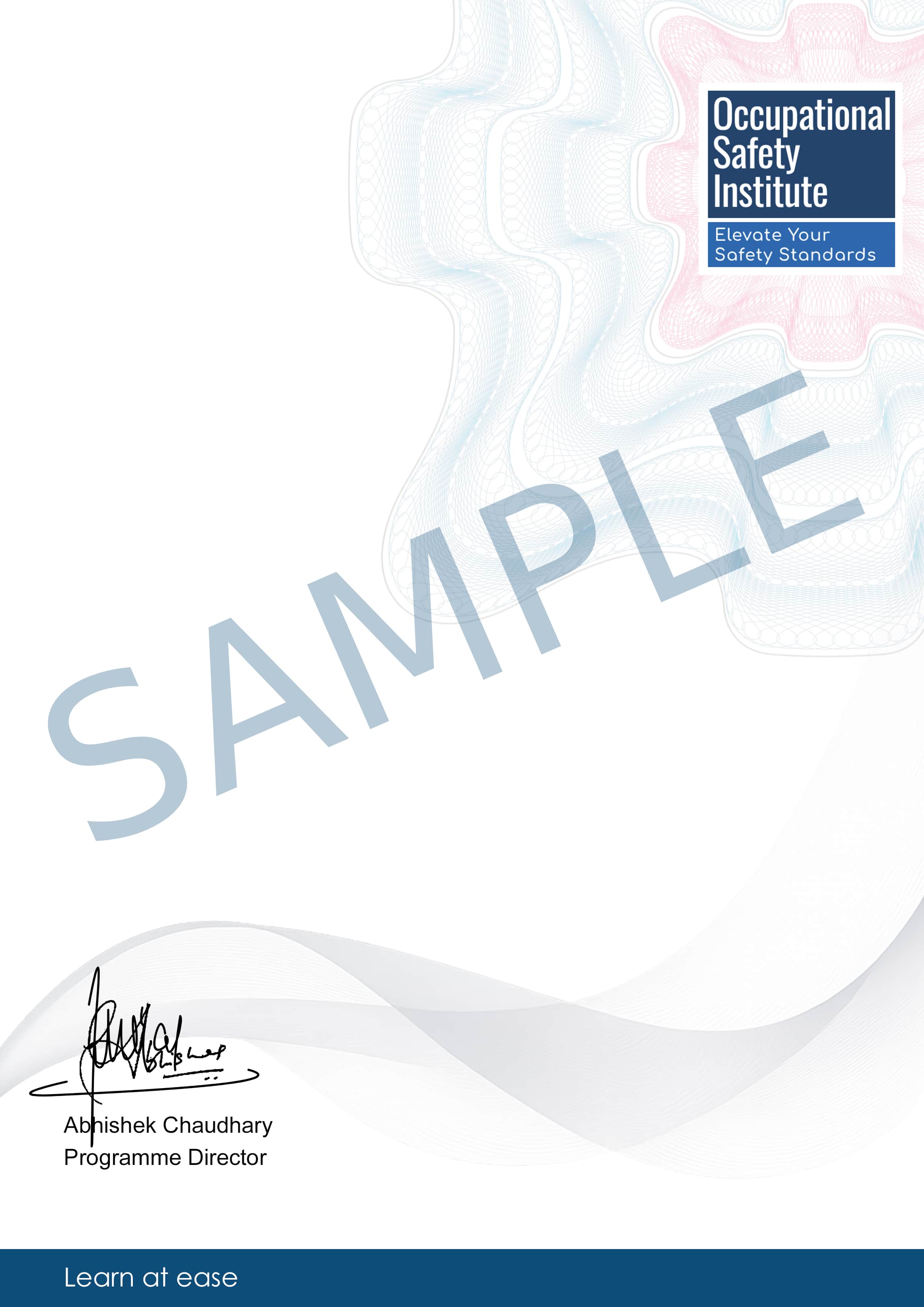
Upon successful completion of this course, you will receive a certificate similar to the one shown below:
No specific prior qualifications are required. However, basic literacy and numeracy skills are essential for successful completion of the course.
The course is self-paced and flexible. Most learners complete it within 1 to 2 months by dedicating 4 to 6 hours per week.
This course is not accredited by a recognised awarding body and is not regulated by an official institution. It is designed for personal and professional development and is not intended to replace or serve as an equivalent to a formal degree or diploma.
This fully online programme includes comprehensive study materials and a range of support options to enhance your learning experience: - Online quizzes (multiple choice questions) - Audio podcasts (expert commentary) - Live student support via chat The course offers maximum flexibility, allowing you to study at your own pace, on your own schedule.
Yes, the course is delivered entirely online with 24/7 access to learning materials. You can study at your convenience from any device with an internet connection.
Specialized 2-7414-7 Accident Prevention and Emergency Response Training
This specialized course provides in-depth training on accid…
広島市現代美術館 Emergency Response and Evacuation Procedures Training
Course about 広島市現代美術館 Emergency Response and Evacuation Pro…
Health and Safety Compliance Management Course
Our Health and Safety Compliance Management Course is desig…
Emergency Response Planning for Occupational Health and Safety Professionals
This course is designed to equip Occupational Health and Sa…
Disclaimer: This certificate is not intended to replace or serve as an equivalent to obtaining a formal degree or diploma. This programme is structured for professional enrichment and is offered independently of any formal accreditation framework.