Searching for courses...
0%

Undergraduate Certificate Implementing and Auditing Effective Safety Management Systems for Organizational Excellence Certification

This course is designed to equip professionals with the knowledge and skills to implement and audit effective safety management systems, leading to organizational excellence. It is ideal for health and safety professionals, managers, and leaders who want to improve their organization's safety performance. The course covers the principles of safety management, risk assessment, and audit techniques, providing participants with practical skills to apply in their workplaces. By taking this course, participants will gain a deeper understanding of safety management systems and how to implement them effectively, leading to improved safety performance and organizational excellence.

Last Updated: July 13, 2026

4.5/5

|

128 reviews

|

642 students enrolled

What you'll learn

Lead health and safety initiatives in organizational settings
Conduct thorough incident investigations to prevent recurrence
Develop a positive safety culture within organizations
Create effective risk communication strategies for diverse audiences
Enrollment
Start Anytime
Duration
1 Month, extend up to 6
Study Mode
Online
Learning Hours
3-4 hours/week

Skills Gained

Management Skills Safety Standards Team Leadership Delegation Risk Assessment

Course Overview

Implementing and Auditing Effective Safety Management Systems for Organizational Excellence Course Overview
This course is designed to equip professionals with the knowledge and skills to implement and audit effective safety management systems, leading to organizational excellence. It is ideal for health and safety professionals, managers, and leaders who want to improve their organization's safety performance. The course covers the principles of safety management, risk assessment, and audit techniques, providing participants with practical skills to apply in their workplaces. By taking this course, participants will gain a deeper understanding of safety management systems and how to implement them effectively, leading to improved safety performance and organizational excellence. This comprehensive course provides in-depth knowledge and practical skills in Implementing and Auditing Effective Safety Management Systems for Organizational Excellence. It is designed to equip professionals with the expertise needed to excel in their field. Participants will benefit from a structured learning approach that combines theoretical knowledge with real-world applications, ensuring they can immediately apply what they learn in their workplace.

Key Benefits

Comprehensive, industry-recognized certification that enhances your professional credentials

Self-paced online learning with 24/7 access to course materials for maximum flexibility

Practical knowledge and skills that can be immediately applied in your workplace

Prerequisites

This course is open to all, with no formal entry requirements. Anyone with a genuine interest in the subject is encouraged to apply.

Who Should Attend

This course is designed for individuals looking to enhance their knowledge and skills in this subject area, including professionals seeking career advancement and newcomers to the field.

Course Content

Module 1: Introduction to Safety Management Systems

This module provides an overview of safety management systems, including the principles, benefits, and components of a safety management system. Participants will learn about the different types of safety management systems and how to develop and implement a safety management system in their organization.

Key Topics Covered:

Introduction to safety management systems
Principles of safety management
Benefits of safety management systems
Components of a safety management system

Module 2: Risk Assessment and Management

This module covers the principles of risk assessment and management, including hazard identification, risk assessment, and control measures. Participants will learn how to conduct risk assessments and develop control measures to mitigate risks in the workplace.

This module provides you with practical frameworks and methodologies for conducting thorough risk assessments in various workplace settings. You'll learn evidence-based approaches to identify, evaluate, and prioritize potential hazards.

Effective risk assessment has been shown to reduce workplace injuries by up to 70% when implemented correctly, making this a critical skill for safety professionals.

Key Topics Covered:

Principles of risk assessment and management
Hazard identification and risk assessment
Control measures and risk mitigation
Review and revision of risk assessments

Module 3: Safety Auditing and Inspection

This module provides an overview of safety auditing and inspection, including the principles, benefits, and types of safety audits. Participants will learn how to conduct safety audits and inspections, and how to develop and implement audit reports and action plans.

Key Topics Covered:

Introduction to safety auditing and inspection
Principles of safety auditing
Types of safety audits
Conducting safety audits and inspections

Module 4: Emergency Response Planning

This module covers the principles of emergency response planning, including emergency response procedures, emergency preparedness, and emergency response training. Participants will learn how to develop and implement emergency response plans and procedures in their organization.

Key Topics Covered:

Introduction to emergency response planning
Emergency response procedures
Emergency preparedness and response training
Review and revision of emergency response plans

Module 5: Continuous Improvement and Performance Monitoring

This module provides an overview of continuous improvement and performance monitoring, including the principles, benefits, and methods of continuous improvement. Participants will learn how to develop and implement continuous improvement plans and monitor safety performance in their organization.

Key Topics Covered:

Introduction to continuous improvement and performance monitoring
Principles of continuous improvement
Methods of continuous improvement
Monitoring and evaluating safety performance

Module 6: Safety Management System Implementation and Maintenance

This module covers the implementation and maintenance of a safety management system, including the development of policies, procedures, and standards. Participants will learn how to implement and maintain a safety management system in their organization, and how to continuously improve safety performance.

Key Topics Covered:

Introduction to safety management system implementation and maintenance
Developing policies, procedures, and standards
Implementing and maintaining a safety management system
Continuously improving safety performance

Learning Resources

Study Materials

This programme includes comprehensive study materials designed to support your learning journey and offers maximum flexibility, allowing you to study at your own pace and at a time that suits you best.

You will have access to online podcasts with expert audio commentary.

In addition, you'll benefit from student support via automatic live chat.

Assessment Methods

Assessments for the programme are conducted online through multiple-choice questions that are carefully designed to evaluate your understanding of the course content.

These assessments are time-bound, encouraging learners to think critically and manage their time effectively while demonstrating their knowledge in a structured and efficient manner.

Career Opportunities

Overview

The demand for health and safety professionals is increasing globally, driven by the need for organizations to improve their safety performance and reduce the risk of accidents and injuries. Health and safety professionals play a critical role in developing and implementing safety management systems, conducting risk assessments and audits, and providing training and guidance to employees. With the right skills and knowledge, health and safety professionals can advance their careers and take on leadership roles in their organizations.

Growth & Development

Health and safety professionals can advance their careers by taking on more senior roles, such as health and safety manager or director. They can also specialize in specific areas, such as occupational health or environmental safety. With experience and further education, health and safety professionals can move into leadership roles, such as CEO or COO, or start their own consulting businesses. The field of health and safety is constantly evolving, with new technologies and techniques being developed to improve safety performance. Health and safety professionals must stay up-to-date with the latest developments and best practices to remain competitive in their careers.

Potential Career Paths

Health and Safety Manager

Responsible for developing and implementing safety management systems, conducting risk assessments and audits, and providing training and guidance to employees.

Relevant Industries:
Manufacturing Construction Healthcare

Safety Consultant

Provides expert advice and guidance to organizations on safety management systems, risk assessments, and audits.

Relevant Industries:
Manufacturing Construction Healthcare

Occupational Health Specialist

Responsible for developing and implementing occupational health programs, conducting workplace assessments, and providing training and guidance to employees.

Relevant Industries:
Manufacturing Construction Healthcare

Additional Opportunities

In addition to career advancement opportunities, health and safety professionals can also benefit from networking opportunities, professional certifications, and further education paths. Many health and safety professionals join professional associations, such as the International Association of Health and Safety, to network with other professionals and stay up-to-date with the latest developments in the field. Professional certifications, such as the Certified Safety Professional (CSP) or the Certified Industrial Hygienist (CIH), can also provide health and safety professionals with recognition and credibility in their careers. Further education paths, such as a master's degree in occupational health and safety, can provide health and safety professionals with advanced knowledge and skills to take on leadership roles or start their own consulting businesses.

Key Benefits of This Career Path

  • High demand across multiple industries
  • Competitive salary and benefits
  • Opportunities for career advancement
  • Make a meaningful impact on workplace safety

What Our Students Say

Rahul Patel 🇮🇳

Health and Safety Manager

"This course helped me develop a comprehensive understanding of safety management systems and equipped me with the skills to effectively audit and implement them in my organization, leading to significant improvements in our safety performance."

Maria Rodriguez 🇲🇽

Quality and Safety Lead

"I gained valuable insights into the principles of safety management and risk assessment, which I was able to apply immediately in my workplace, resulting in a more robust and effective safety management system."

Kofi Owusu 🇬🇭

Operations Manager

"The course provided me with the knowledge and tools to conduct thorough audits of our safety management system, identifying areas for improvement and enabling me to develop targeted strategies to enhance our organizational excellence."

Yara Al-Khaled 🇸🇦

Environmental Health and Safety Specialist

"I appreciated the focus on practical skills and techniques for implementing and auditing safety management systems, which has allowed me to make a tangible impact on my organization's safety culture and performance."

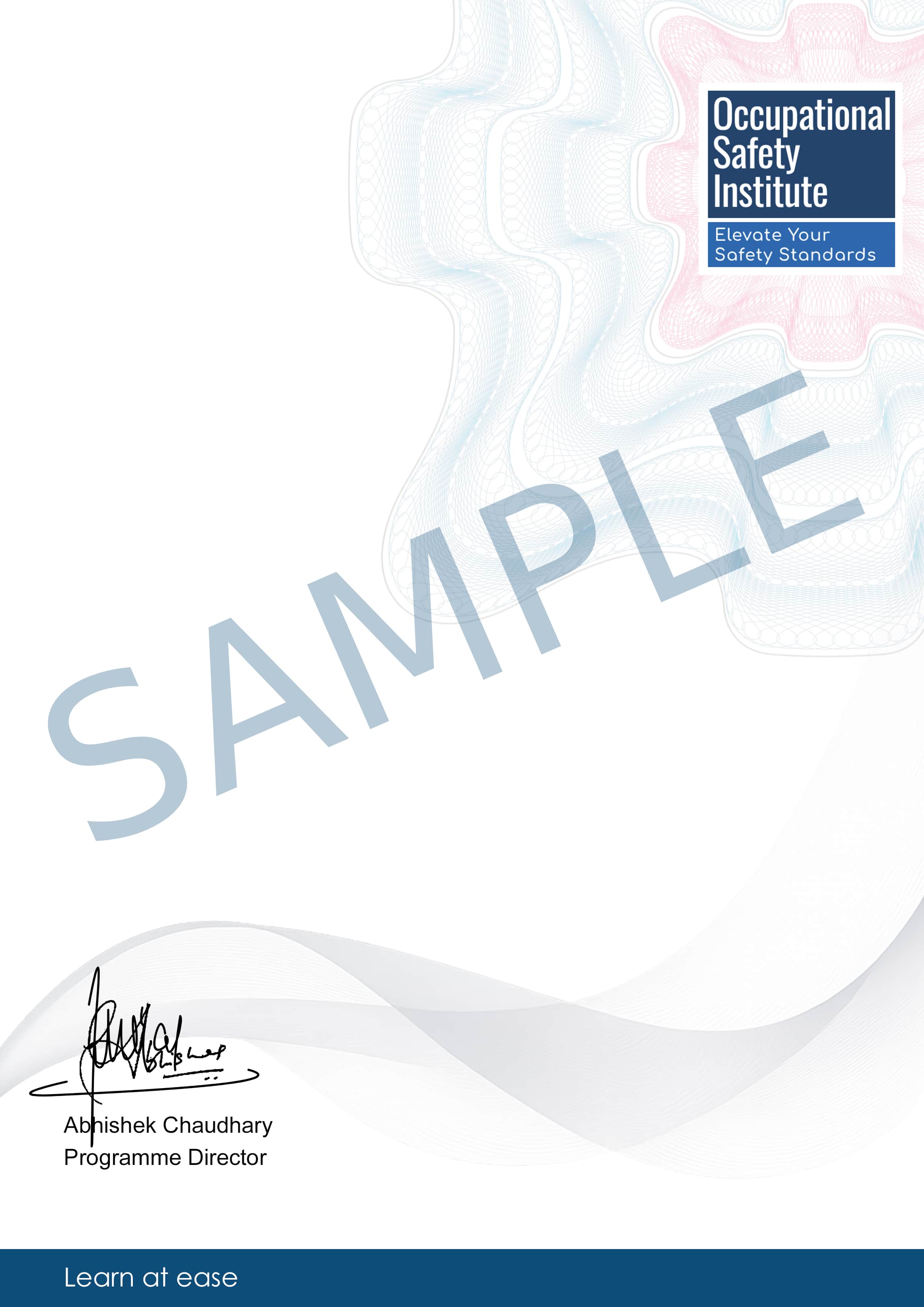
Sample Certificate

Upon successful completion of this course, you will receive a certificate similar to the one shown below:

Certificate Background

Undergraduate Certificate Implementing and Auditing Effective Safety Management Systems for Organizational Excellence

is awarded to

Student Name

Awarded: July 2026

Blockchain ID: 111111111111-eeeeee-2ddddddd-00000

Frequently Asked Questions

No specific prior qualifications are required. However, basic literacy and numeracy skills are essential for successful completion of the course.

The course is self-paced and flexible. Most learners complete it within 1 to 2 months by dedicating 4 to 6 hours per week.

This course is not accredited by a recognised awarding body and is not regulated by an official institution. It is designed for personal and professional development and is not intended to replace or serve as an equivalent to a formal degree or diploma.

This fully online programme includes comprehensive study materials and a range of support options to enhance your learning experience: - Online quizzes (multiple choice questions) - Audio podcasts (expert commentary) - Live student support via chat The course offers maximum flexibility, allowing you to study at your own pace, on your own schedule.

Yes, the course is delivered entirely online with 24/7 access to learning materials. You can study at your convenience from any device with an internet connection.

You might also be interested in

Disclaimer: This certificate is not intended to replace or serve as an equivalent to obtaining a formal degree or diploma. This programme is structured for professional enrichment and is offered independently of any formal accreditation framework.

33% OFF

Complete Course Package

$299
$199.99
one-time payment

🔥 LIMITED TIME OFFER ENDS IN:

0
Days
:
0
Hrs
:
0
Min
:
0
Sec

What's Included:

Comprehensive course materials
Digital Certificate
No Exams, Just Online Quizzes
24/7 automated self-service support

Request Course Info

7-Day Money-Back Guarantee
New
Professional Certificate in Workplace Safety Management