Module 1: Introduction to Eye Care Safety Protocols
This module provides an overview of the importance of safety protocols in eye care, including the use of personal protective equipment, infection control, and emergency procedures.
This course provides a comprehensive overview of safety protocols in eye care, focusing on accuracy in vision correction. It is designed for optometrists, ophthalmologists, and other eye care professionals who want to improve their skills and knowledge in this area. The course covers the latest industry standards and best practices, and provides participants with the knowledge and skills needed to ensure accurate vision correction and maintain a safe working environment. By taking this course, participants can enhance their career prospects and contribute to the delivery of high-quality eye care services.
4.5/5
|128 reviews
|642 students enrolled
Comprehensive, industry-recognized certification that enhances your professional credentials
Self-paced online learning with 24/7 access to course materials for maximum flexibility
Practical knowledge and skills that can be immediately applied in your workplace
This module provides an overview of the importance of safety protocols in eye care, including the use of personal protective equipment, infection control, and emergency procedures.
This module provides participants with the knowledge and skills needed to identify and mitigate risks in the eye care environment.
This module provides you with practical frameworks and methodologies for conducting thorough risk assessments in various workplace settings. You'll learn evidence-based approaches to identify, evaluate, and prioritize potential hazards.
Effective risk assessment has been shown to reduce workplace injuries by up to 70% when implemented correctly, making this a critical skill for safety professionals.
This module provides participants with the knowledge and skills needed to ensure accurate vision correction and maintain a safe working environment.
This module provides participants with the knowledge and skills needed to prevent and control infections in the eye care environment.
This practical module equips you with strategies and techniques to proactively prevent workplace injuries. You'll learn to implement comprehensive safety programs that address both physical and organizational factors.
Effective injury prevention programs deliver an average return on investment of $4-6 for every $1 spent, making them both a safety and financial imperative.
This module provides participants with the knowledge and skills needed to respond to emergencies in the eye care environment.
This module provides participants with the knowledge and skills needed to prioritize patient safety and well-being in the eye care environment.
This programme includes comprehensive study materials designed to support your learning journey and offers maximum flexibility, allowing you to study at your own pace and at a time that suits you best.
You will have access to online podcasts with expert audio commentary.
In addition, you'll benefit from student support via automatic live chat.
Assessments for the programme are conducted online through multiple-choice questions that are carefully designed to evaluate your understanding of the course content.
These assessments are time-bound, encouraging learners to think critically and manage their time effectively while demonstrating their knowledge in a structured and efficient manner.
The eye care industry is a growing and dynamic field, with a wide range of career opportunities available. Eye care professionals who have completed the Eye Care Safety Protocol Training course will be well-positioned to take advantage of these opportunities, and to contribute to the delivery of high-quality eye care services.
The eye care industry is expected to continue growing in the coming years, driven by an aging population and an increased demand for eye care services. As a result, there will be a wide range of career opportunities available for eye care professionals who have the knowledge and skills needed to succeed in this field. The Eye Care Safety Protocol Training course is an essential component of any eye care professional's continuing education, and will provide participants with the knowledge and skills needed to take advantage of these opportunities.
Optometrists are primary health care professionals who specialize in the diagnosis and treatment of eye disorders. They examine patients' eyes, prescribe corrective lenses, and provide other eye care services.
Ophthalmologists are medical doctors who specialize in the diagnosis and treatment of eye disorders. They perform surgery, prescribe medications, and provide other eye care services.
Eye care technicians assist optometrists and ophthalmologists with patient care, including preparing patients for exams, taking medical histories, and performing other administrative tasks.
In addition to these roles, there are many other career opportunities available in the eye care industry. These include opportunities in research and development, sales and marketing, and education and training. The Eye Care Safety Protocol Training course will provide participants with the knowledge and skills needed to take advantage of these opportunities, and to contribute to the delivery of high-quality eye care services.
Optometrist
"This course has significantly improved my understanding of safety protocols in vision correction, particularly in regards to accurate prescribing and dispensing of corrective lenses. I can now confidently ensure that my patients receive the most accurate vision correction possible."
Ophthalmologist
"The course's focus on industry standards and best practices for accuracy in vision correction has been invaluable, allowing me to refine my skills in cataract surgery and intraocular lens implantation."
Orthoptist
"I found the course's coverage of safety protocols for pediatric vision correction to be particularly useful, as it has enabled me to better manage cases of amblyopia and strabismus in my young patients."
Refractionist
"The course has given me a deeper understanding of the importance of accurate refraction and the role it plays in ensuring accurate vision correction, which has improved the overall quality of care I provide to my patients."
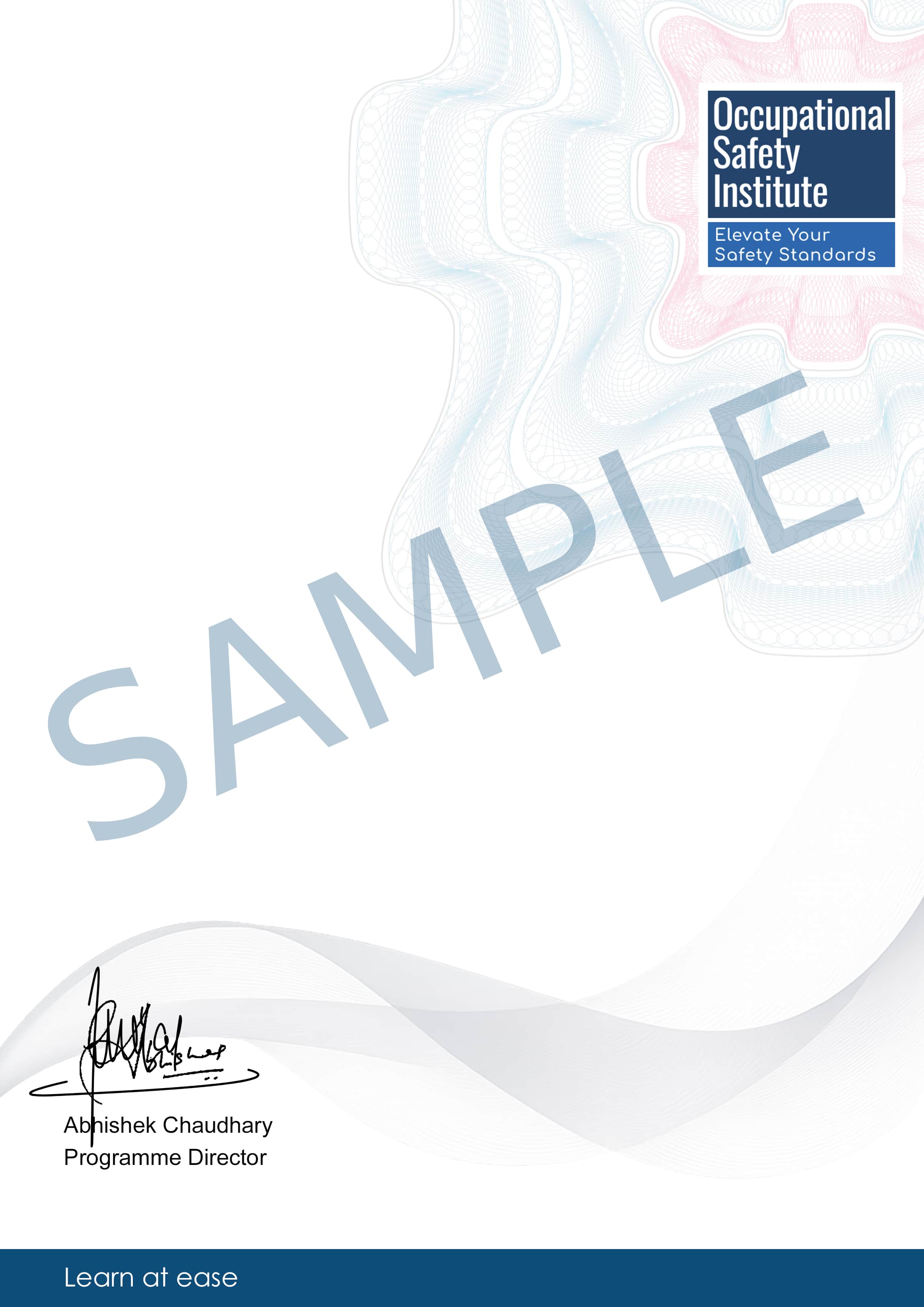
Upon successful completion of this course, you will receive a certificate similar to the one shown below:
No specific prior qualifications are required. However, basic literacy and numeracy skills are essential for successful completion of the course.
The course is self-paced and flexible. Most learners complete it within 1 to 2 months by dedicating 4 to 6 hours per week.
This course is not accredited by a recognised awarding body and is not regulated by an official institution. It is designed for personal and professional development and is not intended to replace or serve as an equivalent to a formal degree or diploma.
This fully online programme includes comprehensive study materials and a range of support options to enhance your learning experience: - Online quizzes (multiple choice questions) - Audio podcasts (expert commentary) - Live student support via chat The course offers maximum flexibility, allowing you to study at your own pace, on your own schedule.
Yes, the course is delivered entirely online with 24/7 access to learning materials. You can study at your convenience from any device with an internet connection.
Implementing 受け取ってください 言い方 in Your Organization: A Health and Safety Communication Strategy
Course about Implementing 受け取ってください 言い方 in Your Organizatio…
Advanced Artificial Intelligence Applications in Health and Safety Management Professional Certification
This course delves into Advanced Artificial Intelligence Ap…
Health and Safety Project Management Essentials Course
This Health and Safety Project Management Essentials Course…
Navigating Financial Law Requirements in Health and Safety Programs
This course focuses on navigating financial law requirement…
Disclaimer: This certificate is not intended to replace or serve as an equivalent to obtaining a formal degree or diploma. This programme is structured for professional enrichment and is offered independently of any formal accreditation framework.